Sunday, April 11, 2010

Best Ethiopian Birthday Ever!

Last week I was really spoiled by my sweet housekeeper Yeshi with an amazing Fasika (Easter), and if it’s possible, I was even more spoiled by her, my friends and colleagues for my 26th birthday on Thursday, April 8th. Birthdays are a pretty big deal for me, and during the days leading up to it, I wrote out my life goals and values, and what I hope to accomplish over the next few years. I was pretty psyched to realize that I have a plan till I’m 30—grad school for 2 years, then work abroad for 2 years. So the fact that 26 rounds up to 30 doesn’t seem that bad now! :) And besides, being closer to 30 means being closer in age to dating men in their 30s, which is something that seems more and more appealing as I’m meeting awesome 30-something men throughout this trip.

So when midnight struck on my actual birthday, I was walking home in drizzly rain, having stayed at the office super late to update my blog and do some fundraising emails and facebook messages for PHE Ethiopia and the projects I’ve seen. My passion for these issues certainly hasn’t worn off since my Gedeo visit, and I’m constantly filled with positive energy, so it was a good way to turn 26! :)


The next morning, I woke up to an amazing breakfast, flowers and face lotion from Yeshi as a gift. So sweet! Then at the office, my friends Mery and Mesy wished me a happy birthday, and Negash brought in catered injera with konsul (dried meat like jerkey) for lunch. They were clearly speaking about me in Amharic, and I asked what it was about and they said “nothing…” and at the end of our lunch, the Engender Health Social Committee surprised me by coming into the office singing happy birthday, wearing party hats and bringing a chocolate cake! It was so unexpected and wonderful! In the past, I’ve always enjoyed wearing a tiara on my birthday, so in true Cassie form I happily wore my party hat all day. ;) Then when the power went out at 6pm and I was finishing a report, Negash started a lengthy discussion with Mesy and Mery in Amharic. Only 20 minutes into it did I realize that he had approved them to come on a 5-6 day vacation to the northern historical sites with me the following week! We had been stressing about asking him the whole time I've been here, because they thought he wouldn’t let both of them go, especially so close to big Earth Day activities they're planning. But apparently he brought up the subject of them needing to accompany me so I could do the trip while I’m here—we didn’t even have to beg! It was the best birthday gift I could have hoped for!

After work, Mesy, Mery, our Engender Health staff friend Nardos (Nardy), and I went to Kaldis Coffee (Ethiopian Starbucks) for ice cream, then they took me to a cultural show. I LOVED it! At first we sat in terrible seats by the bar since we didn’t have a reservation and the place was packed, but after 10 minutes they moved us to front and center. (I think it’s because we're such attractive ladies, it helped them to get more business with us in the limelight). :) The audience was mostly white, and I surprisingly felt SUPER out of place! Haha, it’s interesting to think how much culture shock I’ll have when I go back to LA! But it was seriously the best dancing I’ve ever seen, as groups of 3 women, 3 men, and a solo male/female singer alternated performing dances from the different regions of Ethiopia, all in traditional clothing and hair styles. My favorite was the strangely sexy Guraghe dance, where the men and women rapidly run in place and do a jack-hammer move with their arms in a prayer position. Apparently Mesy knows how to do it because her father’s from that region, so I’m going to beg her to teach it to me on our trip next week!

Near the end of our dinner and my 2 delicious whiskey cokes, I decided that I needed to get in a birthday dance, preferably in front of as many people as possible. ;) I felt pretty good about my shimmy moves after all the practice at Yeshi's house, so with Mery, Mesy and Nardy’s urging, I walked to a nearby dancer at the table next to us to challenge him to a shimmy-shake-down. It was so much fun! The other dancers were a million times better than me, but my friends said that just the fact that I’m a ferenje (foreigner) who’s up there shimmying is really good. Hopefully they’re telling the truth and not just being nice!

After that, Mesy went home, and Mery and Nardy took me to 3 super hip bars right around our office. The first had plush red velvet couches and mood lighting, the second had a hipster feel with candles, and the third was a full-on club with a live rock band, a blue-lit bar, and probably 75 tall beautiful people shaking it. It felt exactly like LA or DC, except that I was the only white person and pretty self-conscious because everyone around me was so damn attractive in a completely different way than me. Still, I had so much fun, and was super impressed with how modern everything was. I couldn’t believe that I’ve been here in Addis for 6 weeks and missed out on all this, but Mery and Mesy assured me that more people were out than usual, since it was the first Thursday night after Fasika. We ended up dancing till 3am before taking a taxi home and CRASHING!

I have to say that it was a shockingly fun night-- not only a better birthday than I expected, but really rewarding to see the fun and beautiful parts of Addis and Ethiopian culture. I think it’s because while I’ve had a wonderful time in my 6 weeks here, I’ve mostly been exposed to Ethiopia’s problems and poverty, as opposed to fun cultural touristy stuff. It’s been intrinsically rewarding to learn about development challenges and solutions, but it’s also weighed heavily on my heart and mind. It was lovely to kick back and just enjoy a night out with my friends—and very much needed!

Since then, I’ve been busily working away with my friends, colleagues and fellow activists back in the states, intent on my idea to “build an international youth movement” around supporting sexual and reproductive health and rights as a just and equitable climate change solution. Although I’m strapped with a million projects to finish right now, Negash had me start writing a proposal for his organizing to get more involved with empowering youth leaders, and I couldn’t be more excited to help him with this, since it’s my area of expertise and what I’m most passionate about with regard to these issues. The other day he introduced me to these AMAZING youth activists, Tinbeb and her sister Liyunesh, who were the only Ethiopian youth to attend the Copenhagen Climate Change negotiations. Hearing their stories about galvanizing 20,000 students last year to march for 350.org’s day of action, and then taking these messages to their decision-makers in Copenhagen, was so inspiring! The organizing environment here is SO challenging, with SO few resources and education, with SO many challenges, that I just can’t imagine all the work these ladies must do and how committed they are to advancing solutions for their country. In the next few days I’m going to more fully interview Tinbeb and Liyunesh, to write some articles about how amazing they are! I’m also thinking of possibly getting in touch with other youth climate leaders in the global south countries I’ll be visiting over the next 5 months to interview them too, and maybe making a video… we’ll see how it goes and hopefully whether I have enough time! Wish me luck in getting everything done before I leave for the North on Thursday! :)

Tuesday, April 6, 2010

Goat Carcasses and Shimmy Shake-Down: My Ethiopian Fasika (Easter)


Wow, I had the best—and the craziest—Easter ever! I must say that I’ve been looking forward to it ever since I got here over a month ago, since everyone’s been gearing up for it by eating “fasting food” (i.e. no meat, cheese or alcohol, among other things I’m sure) and stocking up on goats. Over the past week in particular, I’ve seen more nervous-looking goats strapped to the roofs of cars or shoved in the back seat of vans than I thought I’d see in this lifetime. I was really curious and excited to learn what all this backyard butchery and day-long feasting was about, and still it managed to surpass all of my expectations!

My Fasika (Easter) started last week before my trip to Gedeo zone, when my sweet housekeeper Yeshi told me that I was invited to her home to celebrate. Her 19 year-old nephew Tariku, who’s also the night guard at the house I’m staying at, would meet me at my house at 11am to escort me to Yeshi’s house. I’d asked her before where she lived and she said close, so I figured it was a formality for me to pop in and out, and maybe I could visit my friend Thamar’s house in the same day. Little did I know what lengthy adventure was in store for me!

At 10am on Sunday April 4th I ran to the store to quickly buy an Easter cake to thank her for having me, and at 10:45am Tariku was at the door. We’ve exchanged greetings probably 40 times since I’ve been here, but since he speaks little English and I speak little Amharic, that’s been about it. I know the word for goat is bak, so I joked with him as we walked through my neighborhood to the main Bole road about him killing bak, making the slit throat motion. I don’t know if he laughed because he thought it was funny or if he was just being polite, but he actually belly-laughed when I made a face of astonishment and took pictures of the hundreds of goat carcasses we passed on Bole road. Icky! But kind of hilarious!

I was surprised when we jumped in a taxi bus since I’d thought it was a short walk, and I nervously realized that I’d forgotten my wallet at home. It didn’t end up mattering, because Tariku insisted on paying the few bihr for each of us, or about $0.30. The taxi turned left at a random hotel, and we kept going through a crowded dusty market area, till Tariku and I jumped off at the end of the line. Even though I knew he would escort me back to my place at the end of the day, I tried to memorize where we were going just in case. It was something like “walk straight down the dusty dirt road past coffee ceremony grass and chat (mild chewable grass narcotic) vendors, hundreds of goat carcasses and a soccer field for 20 minutes. Then turn right at the corrugated tin roof jungle neighborhood and walk downhill for 10 minutes. Turn left at the fourth empty car-park lined with a chain link fence and walk for another 10 minutes, till you get to the sketchy bridge made of tree branches roped together. Cross the bridge above a tiny creek and several stubborn donkeys and walk for another 10 minutes down a dustier, rockier path right next to the airport, through dozens of isolated mud huts with metal doors. Yeshi’s house is the one with the yellow door.” All in all, it was an hour-long walk to her house! Talk about close! I couldn’t believe that she and Tariku make this journey twice a day in their plastic crumbling shoes.

The second Yeshi opened the door, I was overwhelmed and humbled with her gracious hospitality. I’d never felt so special as the guest of honor, even though it was her daughter Salam’s 8th birthday! Her eyes were bright as she excitedly greeted me, and I quickly felt underdressed in my skirt, blouse and cheap sandals, since she was wearing a white cloth traditional dress and scarf. She was also wearing bright red lipstick, which showed that Fasika is clearly a very big deal! She sat me down in her little place about the size of my Mom’s bathroom and walk-in closet put together, maybe 30 feet by 18 feet, and put on the noisy radio, apologizing that her TV was currently broken. (My friend/colleague Jason told me this is very common in Ethiopian houses—they love to put on a loud TV whenever they have company, for some reason). She had me sitting on a little faded red velvet love-seat by the door to myself, and her nephew Tariku, her niece Betty, her son Danny, her daughter Salam, Salam’s friend, and Yeshi's friend were all crowded on the love-seat and ground opposite of me, while Yeshi took a kneeling place on a stool by her bed/kitchen area. Her place smelled WONDERFUL from her cooking all day, as well as from the smoky incense of coffee ceremony. I noticed that her place was built of mud but it was really clean, and with the slight electricity and one light bulb overhead, she had a much better standard of living than many houses I’d visited in Bale or Gedeo.

All these details I soaked up over the course of the next 5 hours, since the first thing she did was serve me HEAPS of food. Before anyone else even had a beverage or a plate, she had before me a plate with piles of injera, a Pepsi, and three scoops of different kinds of meats—I think they were ground sheep with onions/pepper, sheep bone wat (thick sauce), and goat bone wat. For the next hour, she urged me to “Eat! Eat! You must eat the bone! It’s the best part! Eat! Eat!” It was delicious, and I tried to eat as slowly as I could, but I ended up gorging myself nevertheless. While I ate, she busily roasted coffee, grounded it, and brewed it right before my eyes! I’d never smelled anything so good. We also had popcorn and bread, and she kept paying a girl outside to run out and get me more soda before the one I was drinking was finished. I couldn’t believe she thought to buy me soda, since we were in the middle of nowhere and I’m sure it was expensive, and they were all drinking tela, a slightly alcoholic home-brewed beer that tastes kinda like sour mud-flavored water. But I really couldn’t feasibly refuse. I begged her to eat some herself, and to give the bone to her kids, since I have no idea how often they get to eat meat. But she insisted. At one point I actually picked up my plate when she tried to put more on, saying I was full—“beka! beka!” (enough)—and she momentarily acted really hurt! I guess Ethiopian Fasika is similar to American Easter, Thanksgiving and Christmas, where the goal is to see how much you can fit in your stomach! :)

Yeshi had bought a cake of her own for her daughter Salam’s 8th birthday, so after we lit the candle and sang happy birthday, we each had two huge pieces of vanilla and mocha-flavored cake. Then, the best part of my Fasika happened, when a popular song came on the radio and everyone mildly shook their shoulders in a traditional dance move. I took a video of Tariku, Danny, Salam and her friend doing it, and pretty soon we were watching the video together and laughing. Then her niece Betty started busting out some really crazy shimmy dance moves, and before we knew it we were all dancing for the next 1-2 hours!

It was one of those rare cross-cultural moments where you forget that you don’t speak the same language, and you’re just communicating through music and dance and gestures and laughter. I was grateful that shimmying happens to be one of my only good dance moves, haha, as I was copying and going back and forth with Betty, the kids, and her friends. By this time another of her neighbors had stopped by, I think perhaps because my presence as a ferenje (foreigner) was a novelty in the area. So now there was a lady whose name I don’t remember but who had beautiful tattoo marks across her chin, as well as a beautiful older lady with a 50s-style sleek upturned hair-do. I really lost myself in the moment, and it wasn’t until I stood up to dance that I realized that I was a whole foot taller than everyone else! I thought, “DAMN I must look really out of place right now!” But they made me feel so welcome and at home, and I truly loved dancing with them, so the feeling of being “the other” didn’t last too long.

After I’d been there from 11:45am to 5:45pm, drank 4 sodas, shimmied up a storm, and eaten until I was ready to pop, Yeshi and her family walked me back to the taxi bus. She realized that my cheap sandal had a hole in it, and made me trade shoes with her! Then she tried to pay for my taxi! This time Tariku ended up insisting, throwing her crumpled up 10 bihr note back at her out the window as we drove away in a swirling cloud of dust and amasegenallos (thank yous). The whole time I was there, I couldn’t believe her kindness and hospitality. I think I’m going to leave her a big tip and anything that doesn’t fit in my box I’m mailing home or my bag that I’m taking to Kenya, but it still could never really be enough. I told her she’s my Ethiopian mother… hopefully she’ll stay employed with PHE-Ethiopia and Packard, so that I can mail her a gift from the U.S. as well!

So that was my beautiful, loving, diverse Easter. I’m so happy that I’m here for another 2 weeks so I’ll get to continue dancing and experiencing this culture with my friends, especially for my birthday the day after tomorrow! Now of course I can’t imagine leaving Ethiopia… but I guess all good things must come to an end, and I have no doubt that I’ll be back some day… hopefully soon!

Friday, April 2, 2010

My Pivotal Moment for Global Justice

I had a beautiful, pivotal moment in my life tonight. All of a sudden, the whole reason that I embarked on my round-the-world trip made sense. I'm filled with an overwhelming sense of peace, joy and love for the world, like I'm seeing everything with new eyes. Mostly, I feel a crazy amount of renewed energy, commitment and passion, since I've redefined my life's mission... to fight for global justice! And the best part is, I’m so grateful that I have my whole life to commit toward this purpose… and amazing friends and colleagues throughout the U.S. and the world who will join me in the fight!

I really can't believe that my spirit is uplifted instead of drained right now, because the past three days have been the most overwhelming and heart-wrenching I’ve had during the past five weeks I’ve spent volunteering in Ethiopia. I made my second field visit in my PHE-Ethiopia internship, to learn about the efforts of the LEM Environment and Development Society of Ethiopia Organization. I visited a community called Wenago in the Gedeo zone of southern Ethiopia, the most densely-populated area in the country, and the second most densely-populated area in Africa.

There are more than 1,000 people per square kilometer, 8 kids per family, and scarce, contaminated water. It wasn’t an urban slum like I saw in the Pasig River community in Manila, in the Philippines, in terms of people living in shoebox-sized corregated tin shacks, in the same area as their livestock. But, the fact that it was a densely populated rural area made it was so much worse in some ways, because at least in cities people have access to running water, health clinics, schools and electricity. Here, people are living off the resources in their backyard in mud houses right next to their neighbors, with teensy plots of land (0.5 hectares on average) for growing coffee and vegetables for themselves and for sale. There’s little sanitary water, no electricity, and virtually no social services like health care or education. Most people didn't even have shoes, and were walking through the mud carrying huge bundles on their backs. I saw literally hundreds of little babies from ages one to five, with flies on their faces that they didn’t bother swatting away, running around in red-dirt-colored t-shirts and bare bottoms.

The government mandates that there be a minimum of one health clinic per 5,000 people, but I visited a community of 17,500 people where there are only two health clinics and four total health workers. I visited one of the health clinics, and in the room where women deliver babies, there was a big hole in the wall and the roof was caving in. Even worse than that, I visited two schools that each had 3,000 kids each, and only 25-35 teachers, so there are 80-90 kids per classroom. The schools don’t have libraries, or any water supply, and the school director said that many of the kids don't get enough to eat at home. So while it’s hard enough to come and find a space in the school to learn, they can't concentrate if they're starving.

Seeing these problems first-hand was devastating, and I couldn’t believe that without assistance, these communities will remain trapped in a vicious cycle of poverty. Thankfully, the organization I was with, LEM-Ethiopia, is doing an amazing job working in the community with very little resources. Not only are they conducting awareness raising workshops on family planning and training people in low-resource income generation like using mud bricks to create fuel-saving stoves and bee-keeping hives, but they’re integrating their projects into the government plan, so that it’s sustainable. I was really impressed with how a little goes a long way, for example:

• For $0.80, women can construct fuel-saving stoves made of mud blocks. This saves time walking to collect fuel wood, trees from being cut down, and health from breathing smoke in their households.

• For $0.80, community members can construct bee-keeping hives made of mud blocks. This helps with income generation in otherwise poverty-stricken rural areas.

• For $3.00, community members can plant a mango tree for income generation, nutrition, and to protect their environment. like fuel-saving stoves, bee hives, indigenous tree seedlings and school materials.

Still, their whole budget was a ridiculously small amount, and while USAID is funding the anti-HIV/AIDS awareness campaigns in the community, they’re clearly not putting funds toward long-term comprehensive family planning and agricultural development solutions.

The whole time I was seeing these projects, my mind was spinning with how my friends and colleagues back in the U.S. need to know what’s going on. We need to force our government to help these kids have an opportunity in life, through digging wells, building more classrooms and providing adequate health care. I could barely concentrate during the drive home, I was so busy mentally planning all the advocacy, presentations, letter-writing and fundraising I’d do!

Meanwhile, my guide through the madness of Gedeo zone was one of the wisest and most beautiful spirits I’ve met on my trip so far, whose name I won't mention here. He was the first person who talked openly with me about the corrupt government, and even shared incredibly personal stories of unjust political persecution, when he was just jailed for six years from age seventeen to twenty-three. While I listened to his stories, I couldn’t believe that here he remains, steadfastly committed to having faith in humanity, that given the proper tools and assistance, they will improve their communities’ livelihoods and defeat poverty in Ethiopia.

Tonight on the drive home to Addis, I told him how I’m so energized to make a difference for these projects, and he told me “you’re at a pivotal moment in your life. You’re young, and we hope that you stay committed to helping Ethiopia for a long time.” It was amazing, because the year of my life before leaving for this trip was full of pivotal moments. I even organized a whole campaign around a book called A Pivotal Moment by my hero Laurie Mazur, on the need to fight our current compound challenges of environmental, poverty, health and gender-related crises. I always thought a pivotal moment was a turning point, and here I am only more committed to my current path to fight for global reproductive health, environmental sustainability and poverty alleviation. I think what matters most is what the “pivot point” is based on—how focused, balanced and centered I am in my renewed mission to fight for global justice!

And the true beauty of this realization for me personally, is that I’m right back where I started in why I chose to go on this trip in the first place… to learn about the world, meet amazing people, and experience these kinds of well-informed, justice-oriented “epiphanies” about my place and purpose in the world. It’s just like what my flower tattoo means to me—“rooted, grounded, emboldened—working together sustainably and synergistically—we can ensure a bright, healthy, just future for the world!”

TAKE ACTION!!!!
April 8th is my 26th birthday, and I'm hoping that anyone reading this will consider donating $26 to the incredible MELCA and LEM-Ethiopia organizations that I've visited here in Ethiopia, to help them meet community needs. I really appreciate any contribution you can make to help. In return, I plan to keep you informed of my experiences through a detailed report and of course, pictures! The best way to donate is to send a check to my US address by April 15th; please email me at cassie.gardener@gmail.com for my address. Thank you in advance for your assistance!

Tuesday, March 30, 2010

Sex and the Environment in Ethiopia

The past few days since I last wrote have been busy, but incredibly inspiring as I’ve deepened my knowledge of population, health and environment issues and witnessed how young people here see these connections. I’m thinking that I will most likely extend my stay here an extra two weeks, so that I can finish my projects and hopefully take a mini-vacation to the north with my work friends Meron, Meseret and Nardos (Mery, Mesy and Nardy). ;) I’m also getting more excited about my plan to work in a developing country for two years after graduate school… fingers crossed that I’ll have enough experience to be hired!

So Tuesday March 23rd I got to participate in a PHE Field Visit to Wenchi Woreda in Oromia (don’t you just love those words?!), along with a bus-full of development practitioners. It was about an hour’s drive through bumpy, rural country-side till we got to the site, and I gazed out the window at the now-familiar site of enset (false banana), mud huts and tilled agricultural hills. It was fascinating to talk with Belay and Abebe about how prior to serving in NGOs, they worked for the government’s ministry of health. Apparently that’s a really common career path here, to go from government to NGO work, and I’m realizing that the government isn’t remotely as corrupt as most people abroad make it out to be.

Before we began our tour of the woreda (district), I learned that the hilly highland area (3,000 meters above sea level) has high population density which has led to environmental degradation, threatening the rural community’s health and livelihoods. The Oromia Development Association (ODA) is a membership-based Ethiopian Resident charity organization, which focuses on education, health, agriculture, and rural potable water supply in the Oromia region. They specialize in training youth on income generation, and voluntary community health workers in long-term contraceptive service provision. Since January 2005, ODA’s efforts have successfully raised the contraceptive prevalence rate from 11% to 40%, and intention to use family planning from 29% to 81%.


In May 2009, ODA began to integrate conservation and livelihood activities with their existing reproductive health efforts, through community education, agro-forestry to decrease the spread of agricultural activity, and aforestation, or planting indigenous seedlings and vetver grass that have commercial and economical value to the community. They also trained 40 model farmers on apple seedling management, and established an 84-member mostly male youth group of “environmental educators,” who also engage in family planning and reproductive health education. We had the opportunity to interview over 20 members of this environmental youth group, mostly boys, who have received training and seedlings from ODA for income generation and to extend the efforts of the government’s health extension workers and development agents. Jason was skeptical at first that these boys actually care about family planning, but after speaking with them, we both thought they seemed really committed to the issues, similarly to the youth I met in Bale Zone.

One club leader said, “We as youth volunteers want to plant 10 million different indigenous trees this winter, to make the area green. We know the link to family planning, because of population pressure on the environment, so we understand that we have to teach the community about reproductive health and HIV/AIDS at the same time.” The boys said that as volunteers, they work in close collaboration with Health Extension Workers to deliver information on maternal and child health and HIV/AIDS, which is critical to reach the 280 clients in a hilly landscape. A female volunteer health worker said that networking and coordination with the youth group in reproductive health awareness has significantly improved her ability to reach the community, and convince them of the importance of family planning for their health, environment and livelihood.

Afterwards we walked to interview a model farmer named Andale, who’s planting apple trees with the support of ODA. He said that he discusses all farming decisions with his wife, and it’s really democratic—but I thought it was interesting that although they already have five children (2 boys and 3 girls), the husband wants one more boy, and the wife doesn’t want any more! She’s currently taking injectibles as a family planning method, so hopefully the decision-making power will stay with her! All in all, although the project is in its initial stage, community members seemed really convinced and motivated to utilize the PHE approach in environmental income generating activities, so I’m hopeful that ODA’s project (and its funding) will continue.

We ended up walking for 3 hours down to the crater lake and back, chatting with adorable snotty-nosed children along the way. I really wanted to take them home with me! Especially when I saw that they were drinking untreated water that flowed down the mountainside, and Jason told me that their bodies probably have parasites that they’re unaware of. Of course they can’t boil their water because it’s so fuel-intensive… ahhh it really makes me second-guess my assumptions about all these rural communities that I’ve visited, and that much more anxious to go earn my MPH and come back and help!

We ended our day at Wenchi with a lovely coffee ceremony, complete with 3 cups of buna (coffee), popcorn, and homemade honey, all accompanied by aromatic incense. Jason told me fascinating stories about his development work in Peru and Ecuador, and I think he convinced me to spend 2 months there this May/June, instead of traveling all the way down to Chile and Argentina. I met some wonderful Chilean friends while traveling in New Zealand and Cambodia, but I agree with Jason that it will be much more culturally interesting to spend time around the indigenous people in Peru and Ecuador. Ahh there’s so much I want to do… but I have to be patient and know that South America will always be there for me to go explore. :)

The rest of the PHE training went really smoothly, and I enjoyed having the opportunity to present an hour-long session on “How to Give an Interview to a Member of the Media.” It was great to offer stories and advice to the PHE experts on the topic, drawing upon on all my experience with newspaper, radio and TV interviews while working with the Sierra Club. I even told them my favorite story of when Fox News bombarded my presentation at my alma mater, UC Davis, and reported on how “Sierra Club says that heating things up in the bedroom can lead to global warming.” (haha) Most of my stories revolved around what not to do, but hopefully it was valuable for them. :)

Saturday March 27th we arrived back safely in Addis, even though our last hour was pretty scary since we were driving in the rain through the dark with a foggy windshield. Jason and I conversed in Spanish, so we wouldn’t have to think about the drive! Negash served us a lovely injera meal at his home, and I perused his book case and snagged 3 fantastic new reads before heading home at midnight—Development as Freedom by Amartya Sen, The End of Poverty by Jeffrey Sachs, and Hot, Flat and Crowded by Thomas Friedman. Yay for intellectual stimulation! I ended up finishing What is the What on Sunday, reading at the Antika pizza place by my house that Jason had recommended, and breaking into full sobs every thirty minutes or so as the main character struggled through tribulations both in an Ethiopian refugee camp and where he ended up resettling in Atlanta, Georgia. I’m so happy that similarly to the book I read before this, Three Cups of Tea by Greg Mortenson, the main character of What is the What, Valentino Achak Deng, travels around the US to give talks about his book and life experiences. Hopefully I’ll get to meet him at some point, too!

Monday was work as usual, and today—Tuesday March 30th—has been crazy busy but awesome. In the morning I teamed up with my friend Teshome from Engender Health, and we went to Addis Ababa University so that I could give a “Sex and the Environment” presentation. Over 70 student club leaders showed up, representing 19 different clubs! The clubs were really multi-dimensional, ranging from Environment, Gender and Peace clubs to Sports, Disability and Cultural clubs. Thankfully Teshe and Negash had looked over my presentation, in addition to my dear friend and fellow Sierra Club activist who went to Guatemala with me, Jenny Shapiro, to give advice on making it more culturally appropriate. Similarly to the presentation I gave to GoJoven youth leaders in Belize last August, I spoke really slowly and clearly, smiled and joked a lot, and asked questions and walked around the room to get them to participate. I think it went really well, since I spoke and had them do activities for an hour, and then they asked questions and discussed the issues for an additional hour! I was really impressed with their high-level questions, for example on why population growth in developing countries matters in climate change discussions when developed countries are the high-emissions culprits. But many of the questions they asked me, they answered among themselves in Amharic, which is what I was hoping for. They wanted to know what’s going on in the US, and I was pleased to tell them that while we’re frustrated with decision-makers’ lack of action, many activists are continuing to work hard in raising awareness and fostering behavioral change. I was also really inspired when 2 young people, Alex from the Environment club and Helen from the Gender club, came up to me afterwards and told me that these issues are their passions in life, and they want to be involved in whatever way they can. That’s what I love to hear! Hopefully I’ll get to meet up with them next week to talk about potential action plans.

After the presentation, I went back to the office, posted a blog on Advocates for Youth’s website about it, and jumped in a car with Lem Ethiopia staff to begin our journey to Gedeo Zone in the south, where I’ll be for the next 4 days to write a report on what’s being done. It’s funny that amidst my 8-month trip around the world, I’m a little tired of so much work-related travel here in Ethiopia! But it’s a fantastic opportunity to see the countryside, and deepen my knowledge for these issues. Arriving in the second largest city of Awasa today, I was startled to see a proper sidewalk… and I realized that I will experience some serious culture shock when I arrive back in LA! Subconsciously I know that I’m a different person, after three months of world travel… but I really can’t wait to return home after all this and see how I’ll view the world in a different way. Yay for mind-opening travel! :)

Monday, March 22, 2010

Monkeys, Fish and PHE Experts in Negash Lodge, Woliso

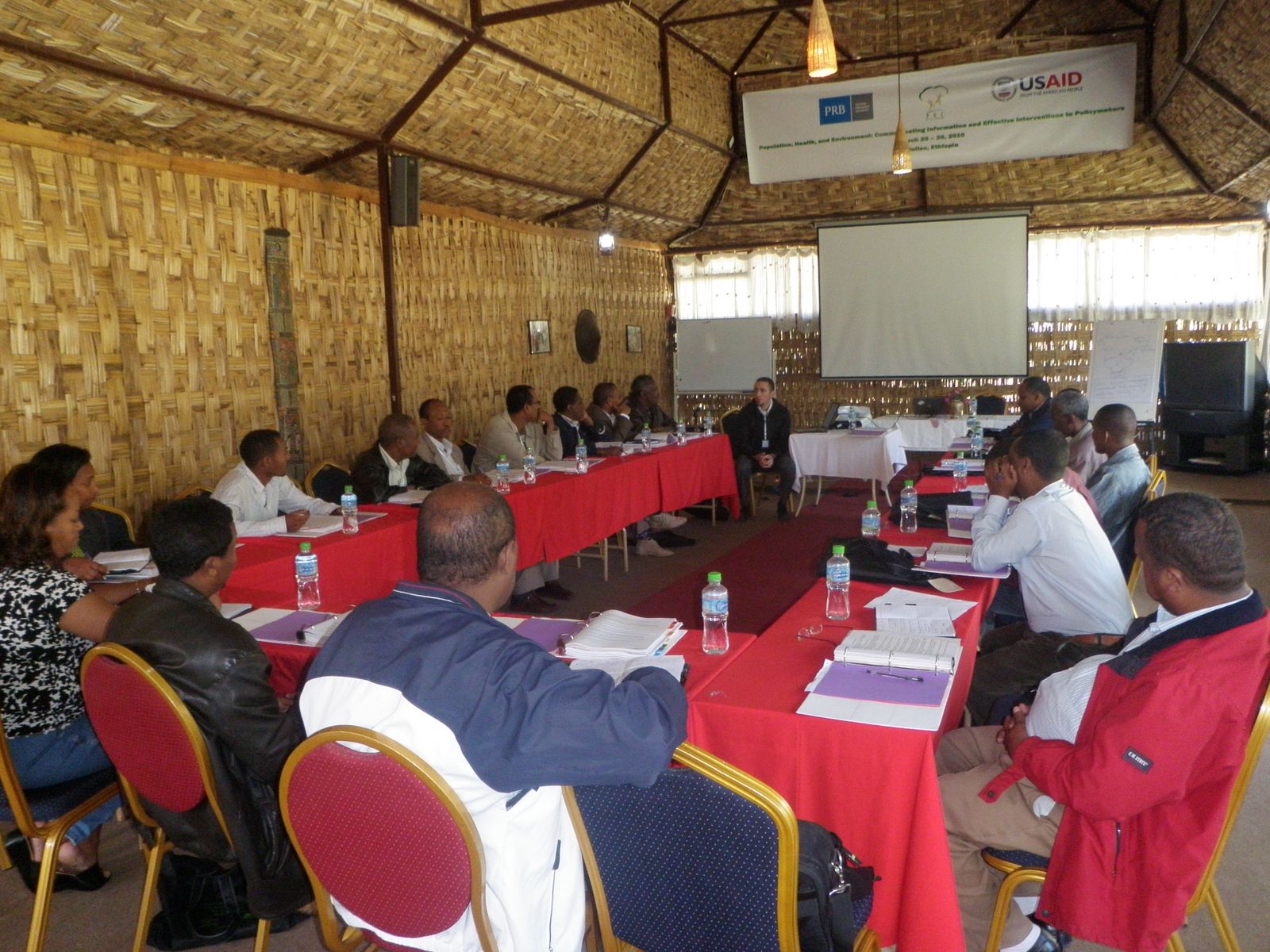
After my amazing Bale Mountains visit last week, I walked into the office Thursday morning March 18th and found out I’d hit the road again early Saturday morning. This time I’d spend a whole week in Woliso, an hour south of Addis, with 20+ development practitioners for a “Population Health and Environment Policy Communications Workshop” sponsored by the Population Reference Bureau (PRB) and USAID. I laughed to see that our agenda said we’d be at Negash Lodge, assuming that my enthusiastic boss Negash Teklu knick-named the place after himself on our agenda to insinuate that we’d be in his world for the week. :) Turns out that was the actual name of the hotel, which was quite luxurious—but it may as well have been named after him, because I certainly felt like I was in PHE land the whole time!


Honestly, it was an unbeatable experience to meet and become friends with so many passionate and brilliant leaders who are implementing the very programs that I’ve advocated for during the past four years. When we all boarded the bus Saturday morning, I immediately wrote their names down and tried to memorize them—Khasaoud with Family Guidance Association (IPPF affiliate), Befekadu with MELCA, Tsehainesh with REST, Ytnayet with Engender Health, Belay with Pathfinder, Morgueta with Oromia Development Association (ODA), Aby with People’s Self Development Organization, Yemane with Save Your Holy land, Esayas with DSW, Abebe with Christian Relief Development Organization, Mogues with Lem Ethiopia, and Shewaye with EWNRA—and that’s just half of them! They kindly laughed at my mispronunciation of their names, and patiently answered my questions about their organizations throughout the week. I couldn’t believe that it was all executive directors who were attending this week-long meeting to improve their communication skills to policy-makers, donors, the media and the public. Didn’t they have imperative work to be doing, running organizations and saving lives?! I took it as evidence that these leaders and their organizations are really committed to the population health and environment development approach, and to their meaningful membership in PHE-Ethiopia Consortium.

The training was facilitated by my colleague from Washington DC, Jason Bremner with PRB, who’s the one person I’ll hang out with during these first five months of world travel who I know from my former life. Over the course of the week in Woliso, we became buddies as I picked his brain about his amazing job, his world travels, challenges facing Ethiopia, and U.S. funding streams for these projects. We also happened to be reading the same profoundly moving book about the Sudanese civil war, What is the What by Dave Eggers, so it was awesome to have an American friend to chat with about our perceptions of African issues and culture. I realized that having spent a month in Ethiopia, I had gotten used to seeing goats in the backs of people’s cars, or not being shocked by cultural oddities like the quick sucking of air as a sign of understanding/approval. When my boss called me fat as a compliment on our first night in Woliso, it was awesome to laugh about it with Jason, rather than staring back blankly and trying to comprehend how the situation would go down in the states. :)


Negash Lodge felt too good for the likes of my budget backpacker tastes, with my own apartment-style hut with a TV, king size bed and bathroom. Moreover, it was set within a winding jungle atmosphere, complete with gopher-like critters, dear, and vervet and colobus monkeys playing around us at all times! But it was apparently only $20/night per room, and important for our week of hard work to be complemented with a relaxing nature ambiance. The actual workshop was held in a huge bamboo room, and though it was really well-equipped with powerpoint and speakers, I have to admit I freaked out every half hour or so when monkeys would chase each other across the roof, causing it to shake overhead. The monkeys hanging out so close to us reminded me of this hilarious Dane Cook comedy sketch, where he says “people think monkeys as pets are nothing but fun, bananas and dancing with toothbrushes, but they’re not! They’re smelly and unsanitary and conniving, and monkeys as pets are just wrong!” I kind of have to agree with him, that while monkeys are cute in theory, dozens of them creepily hanging out on my doorstep is a bit terrifying, haha.

While it was amazing to meet the PHE practitioners and learn about their organizations, it was even more thrilling for me to see my boss Negash in action. The first day that he gave an introduction to the issues we’d be discussing throughout the week, I was beyond impressed with his public speaking expertise. He clearly articulates and justifies his numerical points, and always uses full sentences as though he’d written out what he was going to say beforehand. He’s a natural born charismatic leader, very energetic and always laughing, clapping, and introducing people to one another, with an uncanny ability to delegate tasks in a way that makes you excited to work for him. While watching him present on PHE integrated development solutions as a potential climate change adaptation strategy in Ethiopia, I found myself feeling warm fuzzies of inspiration and devotion to his cause. I realized that his country is so lucky to have him committed to passionately advancing these solutions, and moreover I’m lucky to closely work with and learn from him for 2 months! Yay for a new hero to add to my long list of similarly amazing colleagues and mentors who I’ve met in this field.


Another warm and tingly moment for me was tonight, Monday March 22nd, when Negash, Jason, Shewaye, Mogues, Abebe, Meseret, Befekadu and I were out to dinner for the best fried fish I’ve eaten in my life. Our little group has gone to the same hotel restaurant here in Woliso every night, each person generously taking turns in covering the hisab (bill). We were all laughing as Jason and I competed to eat the most fish off the bone that we could, moving on from the fleshy middle parts to the sketchy, boney head and tail. I’m quite proud of myself that I actually took one big bite of the fish’s face! I had to do it, considering Abebe had annihilated it in a matter of minutes, telling us “the face is the best part—it tastes like a crunchy fish cracker.” (!!) As I looked around the table at each person, laughing and encouraging us to enjoy Ethiopian food, I felt pure love and affection for each of them. It was another one of those “I’m so happy to be here right now doing exactly what I’m doing” moments—I really can’t get enough of them during this trip!

Tomorrow I’m excited that we’ll get to visit a PHE Project site in Wenchi, and do some hiking around a crater lake. I can’t wait—both to learn about the Oromia Development Association’s PHE interventions, and for some much needed exercise! :)

Thursday, March 18, 2010

Adventures in Bale with Bajaj and friends!

I've been in Ethiopia now for 2 weeks, and wasn't really feeling like I was in "Africa" till I visited Bale Mountains National Park over the past 5 days, about 8 hours drive south of Addis. I had stayed up really late the night before we left, so I slept in the land cruiser from 8am-11am, then woke up and it was like HELLO AFRICA. Now this is what I’ve read, spoken, and seen pictures and videos about! Dusty long roads with women carrying huge 40+ pound bags of food, buckets of water, and babies on their backs; tons of people milling about in plastic shoes staring and waving at the land cruiser (or at me—a ferenje, foreigner?); driving on bumpy dusty roads and swerving to avoid donkeys; women bathing in red dirt colored streams; and mud huts in every direction! Talk about a lack of “stuff”! I’d never seen anywhere so rural in my life. It was amazing! And the flat trees sparsely growing in rolling landscapes of small plots of land and desert… it was just crazy.

I didn’t feel “in love” with the landscape, like I did in New Zealand… maybe because the people and their big brown eyes have already won me over :)… but I did feel very strongly compelled to come back and live and work here, even if it’s for a short time as a volunteer or researcher. It was just amazing how I've always been passionate about these issues and understood them, but to actually SEE them was beyond overwhelming. Sure, I saw rural areas in Guatemala or the Philippines, but somehow the houses in those countries always have a touch of modernity, like a cement foundation or even a satellite dish on their thatched roof. I feel like in rural parts of Ethiopia, it’s really just people living off of the basic natural resources in their backyard, with hardly any Western influences. The lack of access to clean water and sanitation, land degradation, deforestation and grinding poverty are in your face, and it’s impossible to ignore how large family sizes and high population growth are even more detrimental to quality of life.

When we arrived in Dinsho woreda (district) of Bale zone, my work friend Mery and I met the MELCA project directors Tesfaye and Aby. Along with our driver Desalne, the five of us had an AMAZINGLY fun time, in addition to accomplishing a ton of work! Over the course of three days, we interviewed probably 50+ people who were involved with this population, health and environment (PHE) development project. It was amazing to really understand their daily challenges, and how the project was improving their lives. I felt like I made really good friends with the project implementers, and now I completely understand how culture, community and creativity go into PHE work on the ground.


Most of all, it was incredible how the people did SO much with so little. Our last day there, we arrived at Fincha Banoo Elementary School in Robe woreda, where hundreds of kids greeted us by singing a welcome song about PHE, wearing PHE sashes across their uniforms, dancing and clapping their hands. It was amazing! These beautiful girls named Fatiye and Rose, the “PHE Club Leaders,” showed us the nursery they had created and how to mix soils for the best growing outcomes. Then they led us to their "Cultural Hut" filled with beautiful hand-crafted objects, and I have to say it was a million times prettier than the National Museum in Addis Ababa. They showcased their cultural artifacts, and I teared up when Rose sang a song about “sinque,” a stick that women use to protect themselves from domestic physical and sexual violence.

Tesfaye explained the environmental and cultural importance of all of the items in the hut, and along with the student leaders, teachers and school director, everyone sang songs and laughed about the different stories that accompanied each object. The best part was when they gave us a PHE presentation, using a “PHE Story-board” that they had created. Their 178 "PHE club members" had each paid 2 bihr or about 15 cents per month in membership fees, and they commissioned a local artist to create it. (His name’s Ibrahim, and he’s also a PHE-trained entrepreneur and environmentalist—I met him later on in the day). The story-board consists of 10 different beautiful paintings comparing large families with small families, a beautiful forest with a degraded landscape, a healthy mother compared with a suffering woman in labor, etc., to show how people who choose smaller, healthier families are also happier and more prosperous with a healthier environment. They've used these story-boards at about 5 different public celebrations such as "Mountain Nyala", Earth Day and Climate Change awareness days, to reach over 10,000 people! I was so inspired while video-taping their presentation. And although there are so many problems... many girls marry at 14, have as many kids as their bodies are capable of having, and many people suffer from HIV/AIDS... there was an overwhelming sense of pride and joy in all the beautiful work they've created, and you could really tell that it’s made a vast improvement in their lives.

They treated us to a fantastic coffee ceremony, and at the end of my pestering them with so many questions that I felt bad that I was keeping them out of class, the school director humbly thanked us for coming and asked me to pose with him for a picture. He presented me with a gift wrapped in white paper… I pulled the paper off and was SHOCKED to see a beautiful hand-woven basket with shells and leather adornments, just like the artifacts we’d seen in the cultural hut. I didn't expect it at all, and the whole world literally spun around me! I felt like I wasn't worthy! I said “Gelletoma, Amasegenallo” (thank you in Oromifa and Amharic languages) over and over, but I still can’t believe it’s mine. Definitely my new most prized possession!

After the school visit, we went to the local artist Ibrahim’s house, which he’d constructed by himself of local recycled materials. He’s created dozens of beautiful sculptured works of art out of recycled plastic, but I couldn’t believe that he’s never sold any of his art! He was truly a beautiful person, who explained the cultural and artistic significance of all of his works of art. He said that he made everything with recycled materials in order to teach his community about the importance of protecting the environment, and told us his dream is to open an art gallery on the second floor of his home. He asked us our advice on how to improve his work, and I suggested “sell it online! Americans would love this!” Only moments later did I realize that he doesn’t have an email address, let alone speak English or know how to post his artwork on the internet. As it is, he makes a living from hand-painting curtains and napkins for local community members, who can barely afford the few dollars they cost. I went ahead and bought a beautiful painting and an Ethiopian wolf sculpture for $65 total, which are now my second most prized possessions! :) If anyone reading this is interested in purchasing his artwork, please let me know and I would love to help make it happen!

After a final long interview about the project with Tesfaye and Aby, the five of us went out to dinner and descended into our last night of inside jokes and giggling hilarity. Earlier in the trip, I had decided that my new favorite word in Amharic is “bajaj,” which is the same as a tuk-tuk or a motorized cart taxi with three wheels, and that somehow became our battle cry. We’d shout it every time there was a lull in the conversation, when we’d move on to a new project, or when we’d “cheers” our glass of local beer. :) After visiting Ibrahim’s house, Tesfaye wouldn’t let go of my little Ethiopian wolf sculpture, and was even giving it little kisses of endearment… it was beyond adorable… so we christened the Ethiopian wolf sculpture as Bajaj! :) Earlier in the day, we had also stepped on a strange round plant that emitted a gray smoke, and my friends told me its knick-name is “yaru geetfas,” which means “old lady fart.” This of course became my second favorite word in Amharic! :) So at the end of dinner, we were walking through the pitch black street since there had just been a power outage, holding hands, and avoiding a stray black dog that was following us… and on the count of three, we yelled YARU GEETFAS as loud as we could into the night! I almost peed my pants I laughed so hard!

In the end, it was an amazing five days of learning, laughing, and falling even more in love with Ethiopian culture and the critical nature of the issues I’m working on. I’m again so unbelievably grateful for this experience, and can’t wait to start my MPH program at UCLA next year to focus on these issues even more. Who knows, maybe I’ll be back here next summer during my research internship abroad, and I’ll have another chance to yell out BAJAJ with my Bale friends!

NOTE: If anyone is interested in learning more about the amazing MELCA project, or donating to support their efforts, please let me know by responding to this blog post. Funding hasn't been secured for next year's PHE project, which would be devastating for the community since the results have so far been successful, doubling the number of family planning users, planting more than 60,000 tree seedlings, and reaching more than 10,000 people in the community. In particular, I'm trying to raise money for Tesfaye and Aby to have a laptop, since they work in 4 communities that are a good hour apart, share one motorbike, and have inconsistently-working desktop computers in their office. Any amount that you can offer will really help them to make a difference in the community! Thank you!

Monday, March 8, 2010

Happy International Women's Day!

Happy International Women’s Day! Today is officially the coolest way that I’ve ever spent my favorite non-traditional holiday. :) Over the past few days I’ve gotten into the women’s rights mood, listening to the “Afro-Entertainment News” radio station, where young women have been talking about Ethiopia’s and Africa’s successes and challenges with regard to women’s human rights. Liberia’s female president, Rwanda’s 58% women-run parliament, and Kenya’s Nobel Peace Prize-winner Wangari Maathai were all celebrated. Last Saturday March 6th, I also participated in a 5k “choice run” for women and girls with my friend Thamar and her mom, which was an excellent tribute. I found it fascinating that “choice” here hasn’t been co-opted by conservatives to mean abortion; it really does mean individual, empowered decision-making. In this case the race was sponsored by a contraception company, so I guess it does come back to family planning, but in a very positive light. (I should mention that abortion is mostly illegal here, and only a small percentage of women use modern contraception methods, so perhaps that’s why the “choice” conversation comes back to whether or not to use condoms/birth control… a very different paradigm shift from how I’m used to thinking in my U.S. advocacy!) The race was super cool though; there were thousands of people who showed up for the race, all of them wearing bright orange t-shirts and laughing, singing and dancing to music. My favorite tune was this catchy inspirational song created by South Africa in honor of the World Cup:

When I get older, I will be stronger, they’ll call me Freedom, just like a waving flag!

Again, yay Ethiopia!

It was too bad that I’ve been sick for the past week or so, and couldn’t actually run in the race, but at least it gave me a chance to chill out at home and finish my 2nd book since I got here 8 days ago, Three Cups of Tea by Greg Mortenson. It was another great way to celebrate women’s rights, since it’s about his efforts to promote peace in Pakistan and Afghanistan by building schools, especially for girls. The book had me crying the whole time, since I was so inspired by his life and his passion to improve life for impoverished people in an incredibly challenging area. Thank goodness his organization, the Central Asian Institute, has him traveling around the U.S. all the time giving speeches, so hopefully I can meet him some day! His efforts really make me feel like I’m doing nothing for the world, haha… but I guess I have to be happy with where I’m at, working to advance reproductive health and sustainable development in Ethiopia on International Women’s Day.

I really love volunteering with PHE-Ethiopia, and getting to know how sexual and reproductive health and rights (SRHR) issues are framed so differently in developing vs. developed countries. Last Friday I got to participate in this big Packard-grantees meeting on how to coordinate youth efforts in sexual and reproductive health programs, and was so amazed with how similar the meeting felt to all the ones I’ve had in DC. It took place in a nice Red Cross conference center, and included the works—guided facilitation, power-points, flip-chart paper, buffet lunch, bottled water, etc. It was really interesting though that at the meeting, they focused a lot on addressing the specific needs of disabled youth in SRHR programs, but they didn’t even mention LGBT (lesbian, gay, bisexual, transgender) youth. This was NOTHING like my experiences with the SRHR movement in the states! I asked my friends about it afterwards, and was quite sad and terrified to hear their answers… basically the LGBT issue here is considered extremely taboo, even within the reproductive health community. My friends said the question doesn’t come down to whether or not people are born gay, but whether people who exhibit gay behavior are human beings or not. (??!!!) One person told me that she doesn’t think the issue will ever be accepted in Ethiopia, or at least in her lifetime. I couldn’t believe this! Especially because if you walk down the street, you’ll see maybe a dozen pairs of two men or two women holding hands… I previously had thought people were more open with their sexuality in Addis Ababa because it’s a city, perhaps than rural areas. But apparently it’s okay for same-sex friends to be affectionate, but nothing more than that! I later learned that this was a key issue at a recent Sexuality Conference in Addis Ababa in February… hopefully at least some youth are moving in a progressive direction!

Well, clearly I still have a more lot to learn about Ethiopian culture, than my 15 minute walk from my house to work has taught me yet. I can’t wait for next week, when I’ll get to visit the Bale Mountains to learn about the MELCA project! Let’s hope I’m feeling well enough to do a good job with all the intensive interviewing I’ll have to do… wish me luck!